

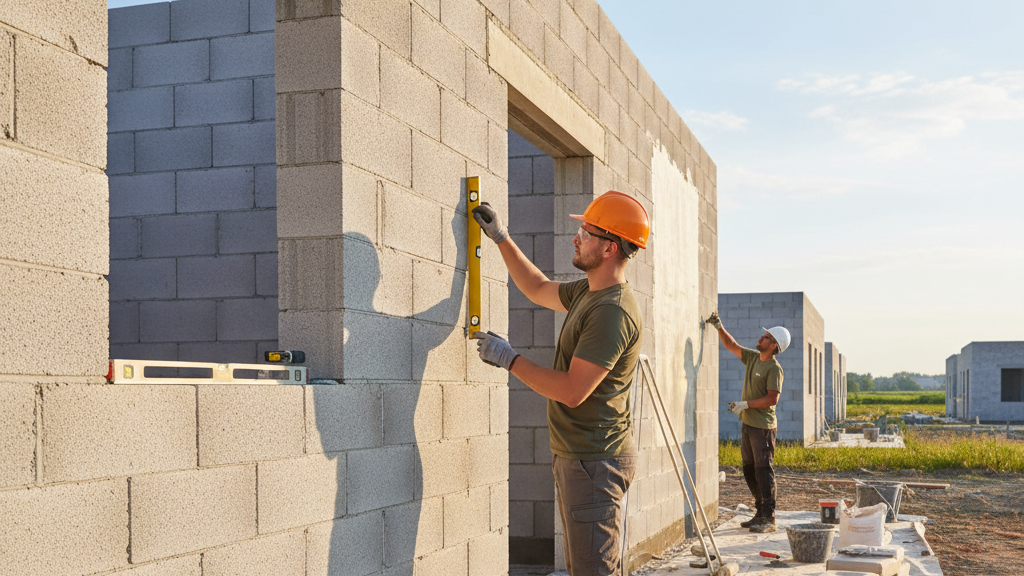
Introduction to AAC Block Buildings
Autoclaved aerated concrete (AAC) blocks are widely used in modern construction for their lightweight, thermal insulation, and fire-resistant properties. While AAC blocks offer durability, proper maintenance ensures structural integrity and aesthetic longevity. This guide focuses on practical upkeep methods tailored for Indian climatic conditions.
Benefits of Proper AAC Block Maintenance
Regular maintenance of AAC block buildings:
- Prevents moisture ingress, reducing efflorescence risks
- Maintains thermal performance by sealing surface pores
- Extends structural lifespan by addressing minor cracks early
- Preserves façade appearance by preventing stain accumulation
Regular Inspection and Monitoring
Conduct bi-annual inspections focusing on:
- Mortar joint integrity (check for hairline cracks)
- Surface discolouration or salt deposits
- Water seepage marks near openings and junctions
- Structural movement signs near lintels and corners
Note: Post-monsoon inspections are critical in high-rainfall regions to assess water damage.
Identifying Common AAC Block Issues
Typical problems in AAC block masonry include:
- Efflorescence (white salt deposits)
- Surface spalling due to freeze-thaw cycles in northern India
- Hairline cracks from thermal expansion
- Localised erosion in coastal areas with high salinity
Cleaning and Surface Care for AAC Blocks
For routine cleaning:
- Use pH-neutral detergents with soft-bristle brushes
- Rinse thoroughly to prevent chemical residue
- Avoid high-pressure washing (limits: 500-800 psi)
Removing Stains and Efflorescence
For persistent issues:
- Organic stains: Diluted vinegar solution (1:3 with water)
- Efflorescence: Brush dry first, then apply 5% phosphoric acid solution
- Rust marks: Commercial rust removers with oxalic acid
Always test cleaners on inconspicuous areas first.
Repairing Cracks and Damages
Assessment protocol:
- Measure crack width with feeler gauge
- Trace crack path to identify root cause
- Classify as structural (≥2mm width) or non-structural
Filling Minor Cracks
For cracks under 1mm width:
- Clean cavity with compressed air
- Apply polymer-modified cement slurry
- Finish with elastomeric sealant for flexible joints
Addressing Structural Damages
For significant repairs:
- Engage structural engineer for assessment
- Use epoxy injection for load-bearing cracks
- Consider carbon fibre reinforcement where needed
Preventive Measures for Longevity
Key strategies:
- Ensure proper curing during initial construction
- Maintain minimum 75mm protective coverings for exterior walls
- Install adequate drainage to prevent water pooling
Waterproofing Techniques
Effective methods for Indian conditions:
- Silane-siloxane penetrating sealers (10-15 year lifespan)
- Cementitious waterproofing coatings for basements
- Elastomeric acrylic finishes for terrace areas
Avoid bitumen-based products that trap moisture.
Controlling Humidity Levels
For interior spaces:
- Maintain 50-60% relative humidity
- Use vapour-permeable interior finishes
- Ensure cross-ventilation in bathrooms/kitchens
Professional Maintenance Services
Consider specialist contractors for:
- Thermal imaging surveys to detect hidden moisture
- Ultrasonic testing for structural integrity checks
- Professional recoating of waterproofing systems
Conclusion and Final Tips
AAC block buildings require different maintenance approaches compared to conventional masonry. Prioritise moisture control, address minor defects promptly, and use compatible repair materials. Document all maintenance activities for future reference and warranty claims.