
Introduction to FlyAsh Blocks and Sustainability
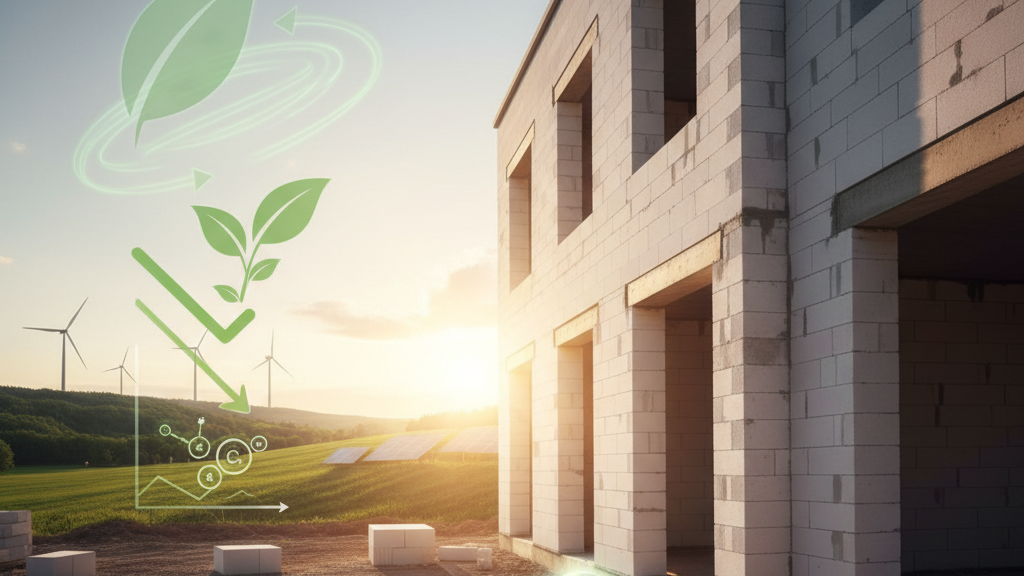
In India’s construction sector, sustainability is no longer optional—it’s a necessity. FlyAsh Blocks, made from industrial by-products like fly ash, cement, and lime, offer a low-carbon alternative to conventional red bricks or concrete blocks. Their lightweight yet durable structure reduces dead load on buildings while cutting embodied carbon by up to 30-40% compared to traditional materials.
How FlyAsh Blocks Lower Carbon Emissions
FlyAsh Blocks contribute to sustainability through three key mechanisms:
- Waste utilisation: Fly ash—a thermal power plant by-product—replaces clay or sand, reducing landfill burden.
- Energy-efficient curing: Autoclaving requires less energy than high-temperature brick firing.
- Transport efficiency: Lighter blocks mean lower fuel consumption during logistics.
Comparing FlyAsh Blocks to Traditional Building Materials
When assessing carbon footprint per square metre of walling:
- Red bricks: Emit ~0.41 kg CO₂ per block due to clay excavation and coal-fired kilns.
- Dense concrete blocks: ~0.30 kg CO₂ per block from cement-intensive production.
- FlyAsh Blocks: As low as 0.15-0.20 kg CO₂ per block (IS 2185-3 compliant).
Note: AAC Blocks—an alternative aerated option—share similar sustainability benefits but differ in pore structure and binder composition.
The Manufacturing Process of FlyAsh Blocks
Understanding production stages clarifies their eco-advantages:
- Raw material batching (fly ash, cement, lime, gypsum)
- Mixing and moulding into blocks
- Pre-curing for initial strength
- High-pressure steam curing (autoclaving)
Energy Efficiency in Production
Autoclaving at ~180°C consumes 60-70% less energy than brick kilns (1000°C+). Fly ash’s pozzolanic properties also reduce cement demand—a major carbon culprit in masonry.
Reduced Raw Material Usage
Every tonne of fly ash used prevents:
- ~1.5 tonnes of topsoil depletion (vs. clay bricks)
- ~0.6 tonnes of sand mining (vs. concrete blocks)
Long-Term Environmental Benefits
Thermal Insulation and Energy Savings
FlyAsh Blocks’ air pockets provide thermal resistances (R-values) of ~0.8-1.25 m²·K/W—cutting HVAC loads by ~20-30% in Indian climates (NBC 2016 guidelines).
Durability and Reduced Waste
With compressive strengths of 3.5-7.5 N/mm² (IS 2185-3), these blocks resist weathering better than red bricks, extending building lifespans and minimising reconstruction waste.
Case Studies: Carbon Savings with FlyAsh Block Projects
Ahmedabad Residential Complex: Using FlyAsh Blocks saved 420 tonnes of CO₂ versus red bricks across 80,000 sq. ft. construction.
Chennai IT Park: Reduced cooling costs by ₹2.1 lakhs/year due to thermal mass benefits.
Transitioning to FlyAsh Blocks in Your Projects
Key considerations for builders:
- Use thin-bed adhesives (NOT mortar) to maintain thermal breaks
- Account for ±1.5 mm dimensional tolerances during design
- Specify compatible plasters to prevent cracking
The Future of Sustainable Construction in India
As net-zero targets gain traction, FlyAsh Blocks—with their dual waste-to-resource and energy-saving advantages—will play a critical role in greener Indian masonry.