

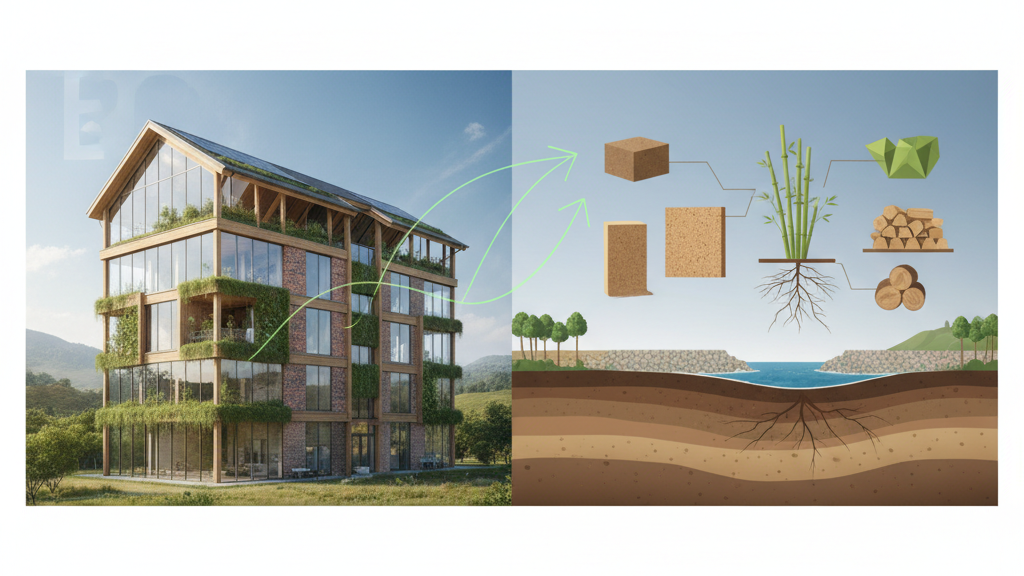
How Sustainable Building Materials Boost Climate-Resilient Construction
Introduction to Climate-Resilient Construction
India’s construction sector faces mounting pressure to adapt to extreme weather, rising temperatures, and resource scarcity. Climate-resilient construction prioritises materials and methods that withstand these stresses while reducing environmental impact.
Why Building Materials Matter in Resilience
A structure’s resilience hinges on material properties: thermal mass, moisture resistance, durability, and embodied carbon. Traditional materials like fired bricks often underperform in cyclonic zones or flood-prone areas, necessitating alternatives.
Top Sustainable Materials for Resilient Structures
Three materials stand out for balancing sustainability with structural resilience in Indian conditions:
Bamboo: The Ultimate Renewable Resource
Bamboo’s tensile strength rivals steel, growing 30x faster than timber. When treated against pests (IS 15912:2012), it serves as:
- Scaffolding for rapid post-disaster rebuilding
- Reinforcement in low-rise masonry
- Cladding for thermal regulation
Recycled Steel for Durability
Steel produced from scrap reduces embodied energy by 75% versus virgin ore. Its applications include:
- Seismic-resistant framing (IS 800:2007)
- Prefabricated modular units
- Corrosion-resistant roofing in coastal zones
Hempcrete’s Insulation Properties
This bio-composite of hemp hurd and lime binder provides:
- 0.07–0.09 W/mK thermal conductivity
- Passive humidity control (65–75% RH stability)
- Carbon-negative lifecycle
Benefits of Using Climate-Adaptive Materials
Beyond resilience, sustainable materials offer:
- Energy efficiency: FlyAsh Blocks’ thermal lag reduces cooling loads by 20–30% versus conventional masonry
- Disaster mitigation: Bamboo’s flexibility prevents collapse in earthquakes
- Circularity: Recycled content diverts waste from landfills
Case Studies: Resilient Materials in Action
Kerala Post-Flood Reconstruction: Bamboo-based temporary shelters withstood subsequent monsoons better than tin sheds.
Gujarat Solar Park: Recycled steel mounting structures survived 180 km/h winds during Cyclone Tauktae.
Future Trends in Sustainable Construction
Emerging innovations include:
- Phase-change materials (PCMs) for thermal buffering
- Mycelium-based insulation panels
- 3D-printed geopolymer structures
How to Choose the Right Material for Your Project
Evaluate materials against:
- Local climate threats (heatwaves, floods, etc.)
- Availability within 500 km radius
- Compatibility with existing tradeskills
- Lifecycle cost over 30 years
Challenges and Solutions in Material Adoption
Challenge: Artisans resist unfamiliar techniques.
Solution: On-site training with material suppliers.
Challenge: Higher upfront costs.
Solution: Banks now offer green construction loans with lower interest.
Conclusion: Building a Climate-Resilient Future
Material choices directly determine a building’s ability to endure climate stresses while reducing emissions. India’s rich heritage of vernacular materials—combined with modern engineering—creates viable pathways for resilient, low-carbon construction.