

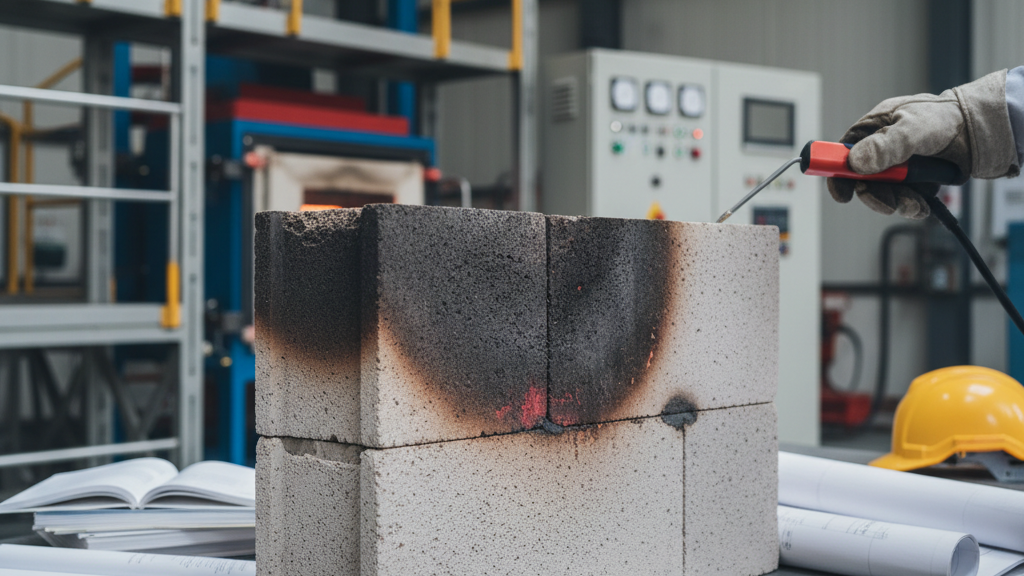
Fire Resistance of Fly-Ash Blocks: Tests, Standards & Best Practices
Fire safety in construction is non-negotiable. FlyAsh Blocks — lightweight, high-strength masonry units made from fly ash, cement, and water — demonstrate excellent fire-resistant properties critical for modern Indian construction. This guide examines test methods, compliance standards, and practical approaches to maximise fire performance.
Understanding Fly-Ash Blocks and Fire Resistance
FlyAsh Blocks inherently resist combustion due to their mineral composition. Unlike timber or polystyrene-insulated panels, they contain no organic material that combusts. Key fire-resistance mechanisms include:
- Thermal stability up to 1,000°C without structural collapse
- Low thermal conductivity, slowing heat transmission
- Zero flammable gas emissions under fire conditions
Key Fire Resistance Tests for Fly-Ash Blocks
Fire ratings are determined through standardised tests measuring:
- Integrity (E): Ability to prevent flame penetration
- Insulation (I): Heat transmission resistance
- Load-bearing capacity (R): Structural stability under fire
Standard Fire Test Methods
Two primary laboratory test protocols apply:
- BS EN 1363-1: Standard exposure to a controlled furnace (temperature curve per ISO 834)
- BS EN 13501-2: Classifies materials as A1 (non-combustible) to F (flammable)
Laboratory vs Field Testing
While lab tests provide controlled comparisons, on-site verification through thermocouple monitoring confirms real-world performance. Critical differences include:
- Jointing methods (thin-bed adhesive vs traditional mortar)
- Wall assembly completeness (including plaster coatings)
- Exposure duration beyond standard test periods
Relevant Fire Safety Standards and Regulations
British and European Standards
FlyAsh Blocks typically comply with:
- BS EN 771-4: Specification for masonry units (autoclaved aerated concrete blocks)
- BS 476 Parts 20-24: Fire tests on building materials
International Fire Safety Norms
Indian projects reference:
- National Building Code (NBC) 2016: Fire safety requirements for walls (Part 4)
- IS 1905: Code of practice for structural masonry
Best Practices for Enhancing Fire Resistance
Material Composition Tips
- Maintain fly ash content ≥65% by volume for stability at high temperatures
- Specify density ≥600 kg/m³ (higher density improves thermal mass)
- Use cement-rich mixes (minimum OPC 43-grade) for binding integrity
Construction Techniques
- Apply thin-bed adhesive (3–5 mm joints) to minimise weak points
- Ensure continuous plaster coating (min. 12 mm gypsum-based or cement plaster)
- Install fire stops at service penetrations (electrical conduits, pipes)
Case Studies: Fire Resistance in Real-World Scenarios
Chennai High-Rise Incident (2019): A 22-storey residential tower with FlyAsh Block walls contained a kitchen fire to one compartment for 117 minutes — exceeding NBC’s 90-minute requirement for load-bearing walls.
Industrial Warehouse Fire (Pune, 2021): Unplastered FlyAsh Blocks demonstrated 68 minutes of integrity protection, allowing safe evacuation.
FAQs on Fire Resistance of Fly-Ash Blocks
Q: How does fire resistance compare to red bricks?
A: FlyAsh Blocks typically outperform fired clay bricks in insulation (I) ratings due to lower thermal conductivity, though both achieve similar integrity (E) ratings.
Q: Does plastering affect fire ratings?
A: Yes — 15 mm cement plaster can increase fire resistance duration by 30–45% by protecting block surfaces from direct flame impingement.