

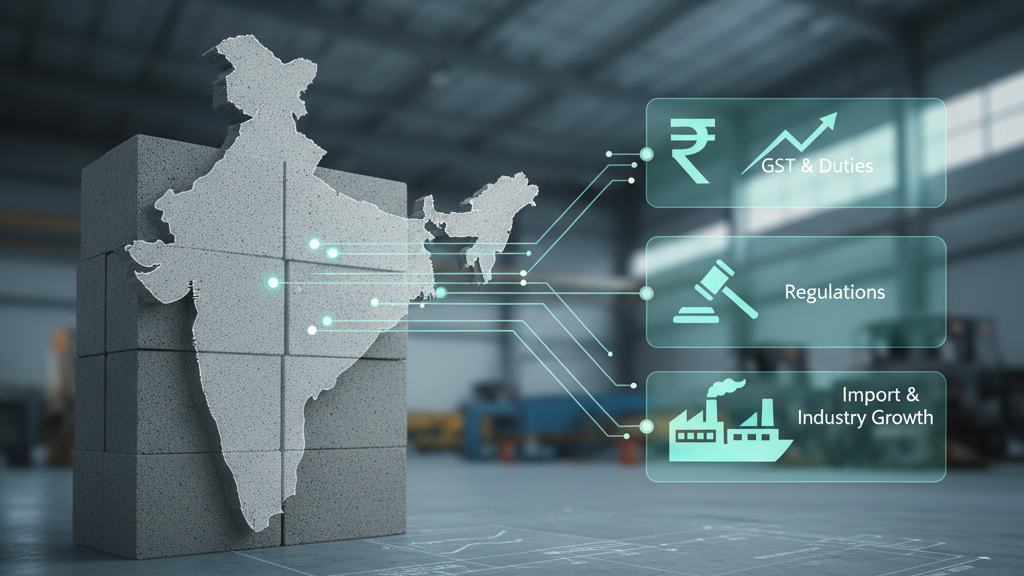
How GST, Import Duties, and Regulations Are Shaping India’s AAC Block Industry
Understanding the AAC Block Industry in India
The autoclaved aerated concrete (AAC) block industry in India has grown significantly due to demand for lightweight, energy-efficient walling solutions. While Featherlite Buildcon manufactures FlyAsh Blocks, AAC Blocks remain a parallel market segment influenced by taxation and policy frameworks. The sector relies on imported machinery, fly ash, and other raw materials, making it sensitive to regulatory changes.
Impact of GST on the AAC Block Sector
GST streamlined tax structures for construction materials but introduced compliance complexities. AAC Blocks fall under the 18% GST slab, higher than traditional bricks (5%), affecting cost competitiveness. However, input tax credits on raw materials like fly ash (5% GST) and cement (28% GST) partially offset this burden for manufacturers.
How Import Duties Affect AAC Block Prices
India imports specialised AAC production machinery, attracting 7.5–10% customs duty. Critical raw materials like aluminium powder face 5–7.5% duties. These costs trickle down to block pricing, creating challenges against locally manufactured alternatives like FlyAsh Blocks that use indigenous equipment and materials.
Current Regulatory Landscape for AAC Manufacturers
AAC manufacturers must comply with:
- IS 2185 (Part 3): Standards for aerated concrete blocks
- Fly ash utilisation norms under MoEFCC notifications
- State-level pollution control board approvals
Non-uniform enforcement across states creates operational hurdles for pan-Indian manufacturers.
GST Rate Structure for AAC Blocks
AAC Blocks attract 18% GST, categorised under HSN code 6810. Key input materials have varying rates:
- Fly ash: 5%
- Cement: 28%
- Gypsum: 18%
The inverted duty structure (higher output tax than input tax) sometimes leads to refund claims.
Customs Duties on AAC Machinery and Raw Materials
Import cost breakdown for AAC production:
- Autoclaves: 7.5% duty
- Cutting machines: 10% duty
- Aluminium powder: 5% duty
These duties incentivise local manufacturing of production equipment.
Challenges Faced by the AAC Industry
Key pain points include:
- High capital expenditure for imported machinery
- State-wise variation in fly ash procurement policies
- Competition from unorganised brick manufacturers
- Skilled labour shortage for precision block production
Future Outlook: Policy Changes and Industry Growth
The industry anticipates:
- Potential GST rationalisation for green building materials
- Revised import duties to promote local equipment manufacturing
- Tighter enforcement of quality standards (BIS certification)
Such changes could improve AAC Block adoption, though FlyAsh Blocks remain a competitive alternative with lower regulatory overhead.