

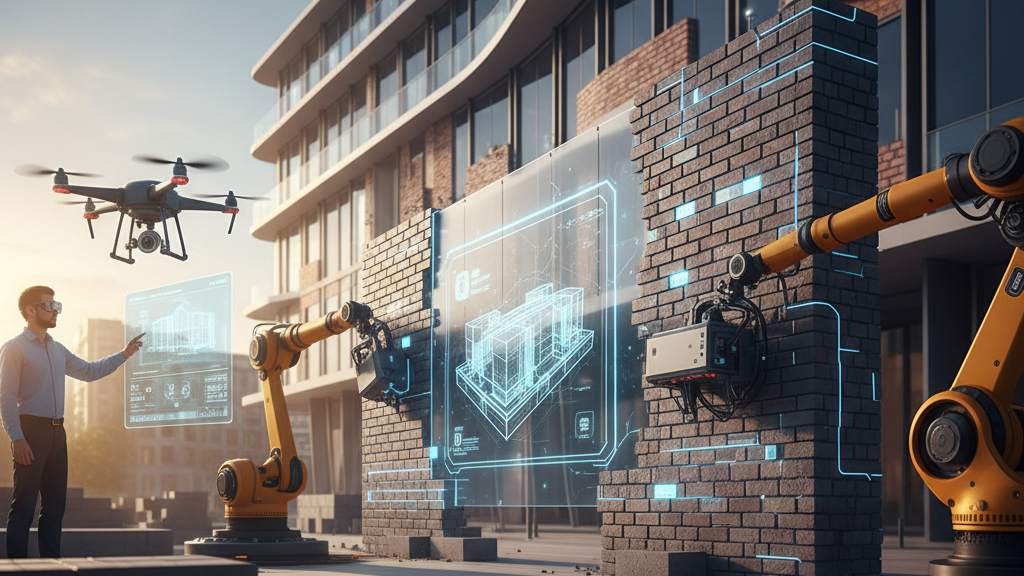
How Disruptive Technologies Are Transforming Masonry and Building Envelopes
Introduction to Disruptive Technologies in Construction
The construction sector in India is witnessing a silent revolution. Disruptive technologies are changing how walls are built, how building envelopes perform, and how structures are maintained. FlyAsh Blocks — already a sustainable alternative to traditional masonry — now integrate with these advancements, bridging modern tech with proven materials science. From robotic bricklayers to AI-powered crack detection, the industry is shifting from labour-intensive methods to precision-driven systems.
Key Disruptive Technologies Reshaping Masonry
Five innovations stand out in modern masonry:
- 3D printing for complex geometries and reduced waste
- Smart materials enhancing thermal/acoustic performance
- Robotics ensuring joint consistency and speed
- AI algorithms optimising block layouts and adhesive application
- IoT sensors monitoring structural health in real-time
3D Printing in Modern Masonry
3D-printed masonry moves beyond prototypes to functional walls. Extruded mortar systems can now integrate FlyAsh Block aggregates, creating composite structures with:
- 15–30% faster construction for non-load-bearing partitions
- Near-zero material cutting waste versus traditional blockwork
- Custom cavity designs for concealed conduit routing
IS 2185-3 (for AAC) and IS 1905 frameworks are being adapted to certify 3D-printed fly ash masonry systems.
Smart Materials for Advanced Building Envelopes
Phase-change materials (PCMs) and aerogel composites are being tested with FlyAsh Blocks to create dynamic thermal barriers. Early trials show:
- PCM-enhanced blocks stabilising indoor temps by 2–4°C in peak summers
- Conductive coatings transforming walls into passive heat exchangers
- Self-healing polymers reducing microcrack propagation in block adhesives
Automated Robotics for Precision Construction
Robotic bricklayers from companies like Fairmat are being calibrated for FlyAsh Block dimensions (common 600x200x100–230mm sizes). Benefits include:
- 0.5mm joint tolerance versus 3–5mm manual variation
- Adhesive application at optimal 2–3mm thickness consistently
- Automated cutting for plumbing/electrical chases
AI and IoT in Building Envelope Maintenance
Post-construction, embedded sensors track:
- Thermal bridges via infrared signatures
- Moisture ingress in mortar joints
- Load distribution shifts in load-bearing FlyAsh Block walls
AI models analyse this data, predicting maintenance needs before visible defects appear.
Challenges and Considerations
While promising, challenges persist:
- High capex for robotic systems (₹25–40 lakh/unit)
- Skill gaps in operating tech-enabled masonry systems
- Regulatory grey areas for drone-based structural inspections
The Future of Tech-Driven Construction
The next decade will likely see FlyAsh Block systems merging deeper with:
- Block-embedded IoT nodes for seismic monitoring
- AR-assisted thin-bed adhesive application
- Automated drone deliveries of blocks to upper floors
As the National Building Code evolves, these integrations will redefine “conventional” masonry.