

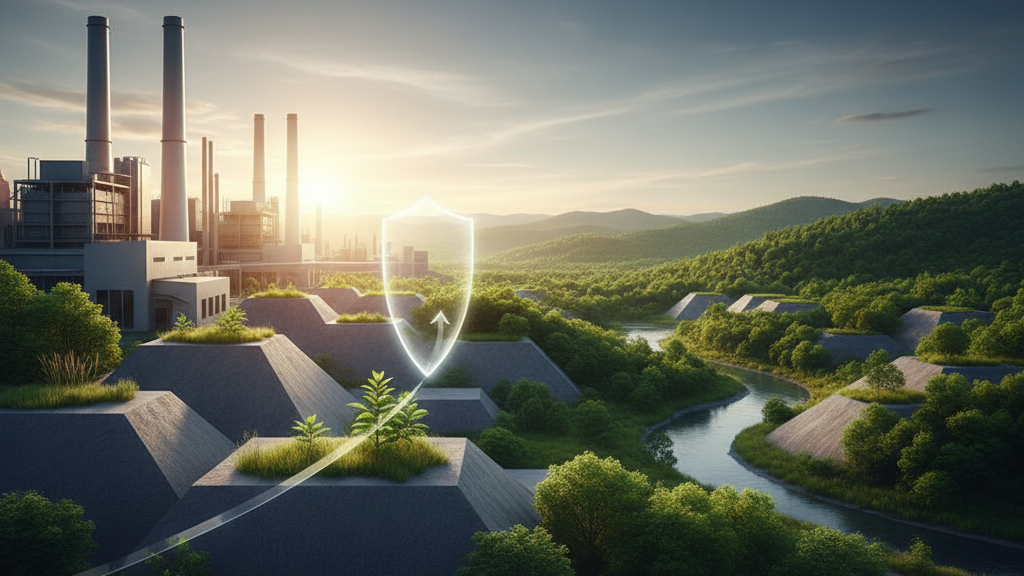
Understanding Fly Ash and Its Environmental Challenges
Fly ash, a fine residue from coal combustion in thermal power plants, poses significant disposal challenges. In India, nearly 80% of the 250 million tonnes generated annually ends up in landfills, occupying space and contaminating soil and groundwater. Its alkaline nature and heavy metal content demand responsible handling.
The Role of Fly Ash in Industrial Waste Reduction
Fly ash utilisation transforms waste into valuable raw materials. When incorporated into construction materials like FlyAsh Blocks or cement, it diverts millions of tonnes from landfills. This aligns with India’s Solid Waste Management Rules (2016) mandating power plants to achieve 100% utilisation—though current rates hover around 60%.
Key Applications of Fly Ash Across Industries
Construction and Infrastructure
Fly ash replaces 20-35% of Portland cement in concrete (IS 3812) and serves as the primary binder in FlyAsh Blocks (IS 2185-3). Its pozzolanic properties enhance durability while reducing embodied energy by 30-40% compared to conventional materials.
Agriculture and Soil Stabilisation
When processed to neutralise alkalinity, fly ash improves water retention in sandy soils and supplies micronutrients like boron and zinc. However, strict pH and heavy metal controls (CPCB guidelines) are essential to prevent crop contamination.
Benefits of Fly Ash Utilisation
- Reducing Landfill Dependency: Every tonne used in construction saves 1 cubic metre of landfill space.
- Lowering Carbon Footprint: FlyAsh Blocks emit 50% less CO2 during production than fired clay bricks.
- Resource Efficiency: Conserves virgin materials—1 tonne of fly ash replaces 0.7 tonnes of mined sand in concrete.
Case Studies of Successful Fly Ash Utilisation
Delhi Metro Phase III: Used 1.2 million tonnes of fly ash in concrete viaducts, reducing project costs by 15% while meeting IS 456 durability standards.
Rural Road Projects: Maharashtra’s Pradhan Mantri Gram Sadak Yojana employed fly ash-stabilised soil for 500+ km of low-traffic roads, cutting material costs by 30%.
Challenges and Considerations in Fly Ash Management
Variability in composition requires batch testing for construction suitability. Unprocessed fly ash’s high alkalinity (pH 10-12) limits direct agricultural use. Transportation costs from power plants to construction sites remain a barrier—localised recycling hubs could improve viability.
Future Trends in Sustainable Industrial Waste Solutions
Emerging technologies like geopolymer concrete (80% fly ash content) and carbon capture during ash formation could further enhance sustainability. The Bureau of Indian Standards’ draft for fly ash-based geopolymers (under IS 16714) signals regulatory support for advanced applications.
Conclusion: Embracing Fly Ash for a Greener Future
Systematic fly ash utilisation addresses India’s dual challenges of industrial waste and sustainable construction. With improved processing standards and policy enforcement, it can significantly advance circular economy goals while delivering performance-proven materials like FlyAsh Blocks.