

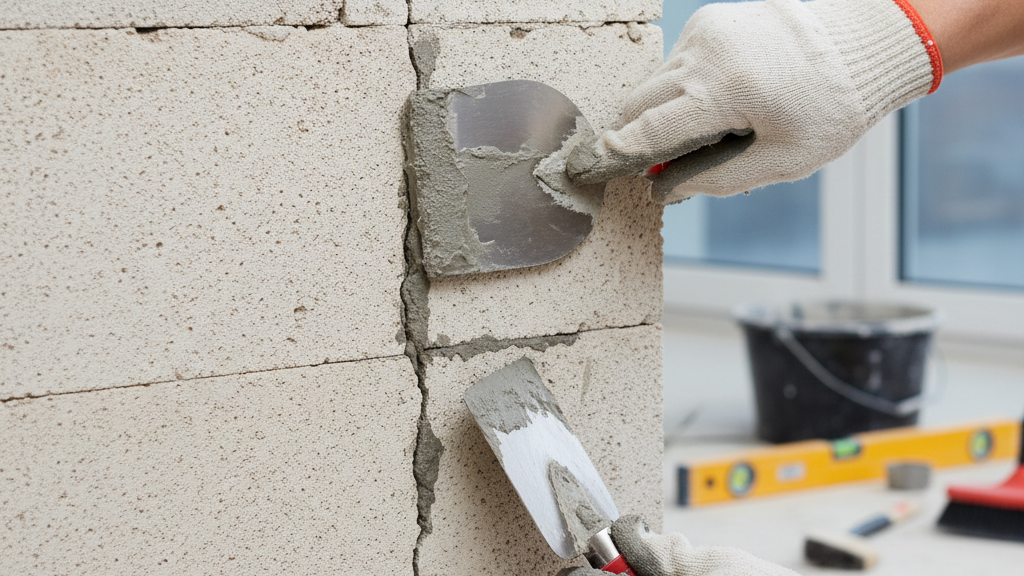
How to Repair Cracks and Defects in AAC Block Walls: A Step-by-Step Guide
Understanding AAC Block Walls
AAC (Autoclaved Aerated Concrete) blocks are lightweight, high-insulation building materials widely used in modern Indian construction. While durable, these blocks can develop cracks or surface defects due to structural stress, poor workmanship, or environmental factors.
Common Causes of Cracks and Defects in AAC Blocks
- Settling foundations: Differential settlement in buildings creates tension cracks in walls.
- Thermal movement: Expansion/contraction cycles from temperature changes.
- Improper jointing: Lack of expansion joints or incorrect adhesive application.
- Moisture penetration: Water damage compromising block integrity.
- Structural overloading: Excessive loads beyond wall capacity.
Materials and Tools Needed for Repair
Gather these essential items before starting:
- AAC block repair mortar (polymer-modified preferred)
- Mesh tape for wide cracks
- Wire brush and vacuum cleaner
- Putty knife and trowels
- Sandpaper (medium and fine grit)
- Primer suitable for AAC surfaces
- Damp sponge
Step-by-Step Repair Process
Preparing the Damaged Area
- Clean loose debris with a wire brush
- Vacuum dust from cracks and surrounding area
- Dampen the repair area (prevents premature drying of mortar)
- Apply primer if recommended by mortar manufacturer
Filling Small Cracks (less than 3mm)
- Widen crack slightly (V-groove) for better adhesion
- Press repair mortar into crack using putty knife
- Scrape excess mortar flush with wall surface
- Lightly damp-cure for 24 hours
Repairing Larger Cracks and Defects
- Create clean edges by removing loose material
- Apply self-adhesive mesh tape over larger cracks
- Layer repair mortar in stages for deep repairs (max 10mm/layer)
- Use trowel to match surrounding wall texture
Finishing and Curing
- Protect repairs from direct sunlight and wind during curing
- Maintain slight moisture for 48-72 hours (damp sponge as needed)
- Sand repaired areas smooth once fully cured
- Apply finishing coat if required for visual uniformity
Preventing Future Cracks in AAC Block Walls
Mitigate recurring issues through these measures:
- Install movement joints as per IS 1905 guidelines
- Use flexible adhesives and sealants compatible with AAC
- Ensure proper curing during initial construction
- Implement adequate drainage around foundations
- Consider protective coatings in high-moisture areas
When to Call a Professional
Seek expert evaluation for:
- Cracks wider than 5mm or showing movement
- Structural cracks following mortar joints
- Recurring defects in the same location
- Suspected foundation issues causing wall damage