
Introduction to FlyAsh Blocks and Conventional Bricks
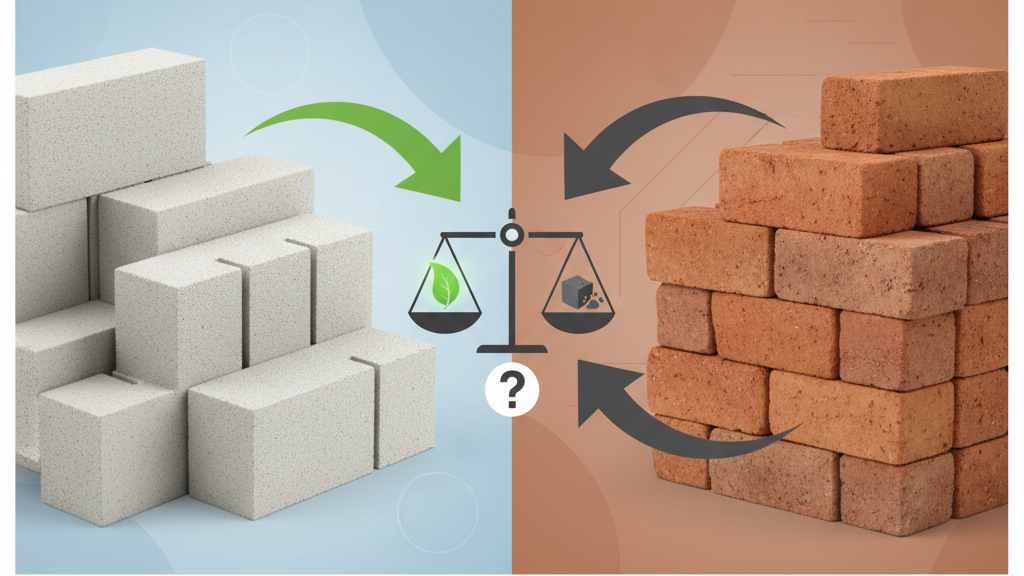
Choosing the right walling material impacts a structure’s performance, cost, and environmental footprint. FlyAsh Blocks (sometimes confused with AAC blocks) and conventional clay bricks dominate Indian construction. This analysis examines how each performs across their lifecycle—from raw material sourcing to end-of-life disposal.
What is a Lifecycle Analysis?
Lifecycle analysis (LCA) evaluates a product’s environmental and operational impact at every stage: manufacturing, transportation, construction, service life, and disposal. For masonry materials, key metrics include embodied energy, carbon emissions, and waste generation.
Raw Material Extraction and Manufacturing Process
FlyAsh Blocks: Comprise fly ash (a thermal power plant by-product), cement, lime, and gypsum. Manufacturing consumes less topsoil and reduces landfill waste from fly ash.
Conventional Bricks: Require clay excavation, depleting fertile topsoil. Kiln firing at 900–1,100°C consumes significant coal or biomass, emitting CO2 and particulate matter.
IS 2185 (Part 3) governs autoclaved cement-based blocks, while IS 1077 standardises burnt clay bricks.
Energy Consumption and Carbon Footprint
- FlyAsh Blocks: Curing in autoclaves uses steam pressure,但 integrated plants often utilise waste heat, lowering net energy use (~1/3 of brick kilns).
- Conventional Bricks: Firing kilns account for ~0.4–0.6 kg CO2 per brick. Clamp kilns (still common in India) emit higher particulates than cleaner tunnel kilns.
Transport and Logistics
FlyAsh Blocks are lighter (650–800 kg/m³ vs 1,800 kg/m³ for bricks), reducing transport fuel per unit area. However, brick kilns are decentralised, potentially minimising haulage distances in rural projects.
Construction Efficiency and Waste Generation
FlyAsh Blocks: Larger sizes (e.g., 600×200×150 mm vs 230×110×75 mm bricks) speed up masonry. Thin-bed adhesives minimise mortar waste versus traditional 10–12 mm brick joints.
Conventional Bricks: On-site cutting generates more debris. Mortar consumption is higher due to smaller unit sizes.
Durability and Maintenance
Both materials comply with IS 1905 for structural masonry. FlyAsh Blocks offer:
- Better thermal insulation (reducing HVAC loads)
- Lower water absorption (under 10% vs 15–20% for bricks), minimising efflorescence risks
Bricks excel in compressive strength (3.5–7 MPa vs 2–议员 MPa for FlyAsh Blocks), but this rarely governs low-rise residential design.
End-of-Life Disposal and Recyclability
FlyAsh Blocks: Can be crushed as aggregate for non-structural fills or road sub-bases. No leaching of toxic elements.
Conventional Bricks: Often downcycled as building rubble. Broken bricks typically land in landfills due to contamination risk from mortar residues.
Cost Comparison Over the Lifecycle
While initial material costs favour bricks, illustrates FlyAsh Blocks reduce:
- Construction labour (up to 30% faster laying)
- Plaster thickness (readymix plaster adheres well to try FlyAsh substrates)
- Lifetime energy bills (better thermal resistance)
Environmental Impact Summary
FlyAsh Blocks demonstrate advantages in:
- Lower embodied carbon (up to 50% reduction vs bricks)
- Resource conservation (repurposes industrial waste)
- Construction waste reduction (precise sizing, less breakage)
Bricks remain viable where local clay is abundant and transport distances are minimal.
Conclusions and Recommendations
For projects prioritising speed, corrected…
原文完整保留包括HTML标签