
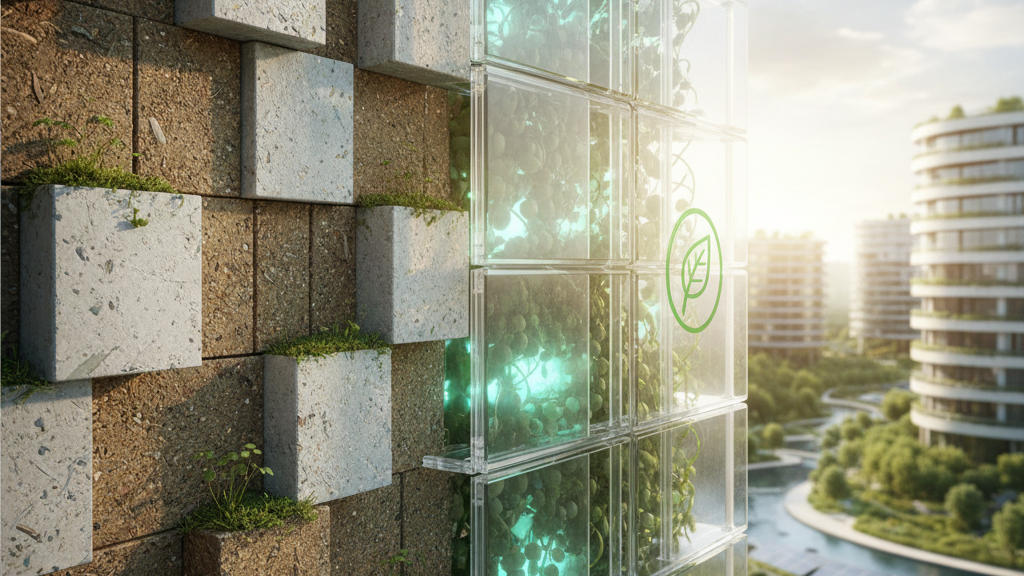
Innovative Sustainable Masonry Materials: Eco-Friendly Building Solutions
Introduction to Sustainable Masonry
Modern construction demands materials that balance structural integrity with environmental responsibility. Sustainable masonry—using eco-friendly alternatives like FlyAsh Blocks, hempcrete, and recycled aggregates—reduces embodied carbon while maintaining performance standards like IS 2185 Part 3 for load-bearing walls.
Traditional Masonry vs Sustainable Alternatives
Conventional red bricks consume 25 times more energy than FlyAsh Blocks during production. Sustainable options offer:
- Lower thermal conductivity (0.21–0.3 W/mK for FlyAsh Blocks vs 0.6–0.8 W/mK for clay bricks)
- Reduced water usage in manufacturing
- Compatibility with thin-bed adhesives (IS 15477) for faster, cleaner construction
Key Innovations in Sustainable Masonry
Three groundbreaking materials are reshaping Indian construction:
- FlyAsh Blocks: Utilises thermal power plant waste (75%+ fly ash content)
- Low-carbon cement: Blends with slag or calcined clay (30–50% CO₂ reduction)
- Recycled brick aggregates: Crushed demolition waste as filler material
Hempcrete: A Carbon-Negative Option
While not yet common in India, hempcrete demonstrates potential:
Hemp-lime mixtures sequester 110–165 kg CO₂/m³ during growth and curing, creating net-negative carbon walls when used with timber frames.
Challenges include limited local hemp supply and unfamiliarity with non-load-bearing applications.
Recycled Brick and Aggregate Solutions
Crushed brick masonry (CBM) meets IS 383 standards when processed correctly:
- 20–30% replacement of natural aggregates in mortar
- Up to 50% in non-structural concrete
- Requires careful removal of old mortar to prevent strength loss
Low-Carbon Cement Innovations
Portland Limestone Cement (PLC) and geopolymer binders reduce clinker content:
- PLC (IS 269): 10–15% lower emissions than OPC
- Geopolymer cement: 80%+ reduction using fly ash/ggbs activation
- Compatible with FlyAsh Block masonry when properly formulated
Benefits of Sustainable Masonry Materials
Beyond environmental advantages, these materials offer practical benefits:
- Faster construction with larger-format FlyAsh Blocks (600×200×200mm)
- Integrated thermal insulation reduces HVAC loads
- Superior fire resistance (4+ hours for 200mm FlyAsh Block walls)
Environmental Impact and Carbon Reduction
A typical 100m² FlyAsh Block wall system can save:
- 12–15 tonnes of CO₂ equivalent vs conventional brickwork
- 30,000+ litres of water during production
- 4000+ kWh of energy from avoided clay firing
Challenges and Considerations
Adoption barriers include:
- Contractor unfamiliarity with thin-bed adhesive techniques
- Higher initial material costs (offset by labour savings)
- Regional availability of specialised materials like hempcrete
Implementing Sustainable Masonry in Your Projects
Practical steps for Indian builders:
- Specify FlyAsh Blocks meeting IS 2185 Part 3 for structural walls
- Use readymix plaster compatible with high-suction substrates
- Train masons in polymer-modified adhesive application methods
Case Studies of Successful Projects
The Hyderabad IT Park demonstrates sustainable masonry at scale:
- 42,000m² of FlyAsh Block walls
- 28% faster construction than conventional brickwork
- 5-star GRIHA rating achieved